Building
A coastal home in Colombia needs different care than a mountain one
Cartagena, Barranquilla and Santa Marta ask more of a building than Medellín does. What that means for materials, cooling, storm preparation and a house you leave empty for months.
Words: Aburrá Brief editors
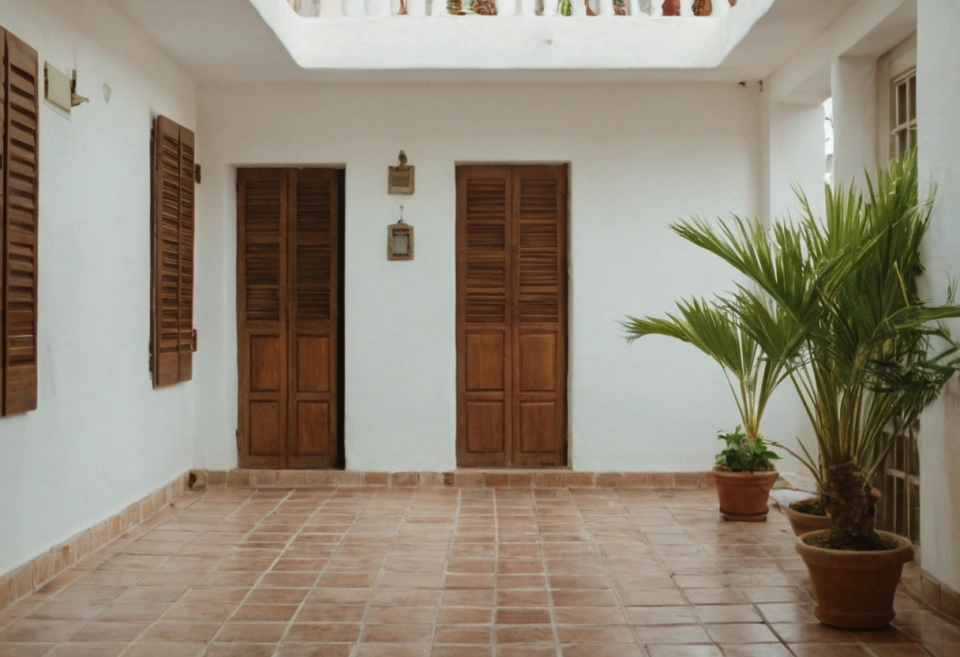
A retiree eyeing Cartagena, a remote worker renting in Barranquilla, a family buying a second place near Santa Marta: each faces the same choice between Colombia's Caribbean coast and its mountains. The two climates punish buildings differently. Knowing which failures to expect helps you choose a property, judge a renovation quote and set a maintenance routine you can keep.
The coast and the valley fail in different ways
Medellín sits high enough that most apartments need no heating or cooling. Windows stay open. The main enemies are damp in poorly ventilated corners, rain driven onto west-facing walls, and mildew inside closets against an outside wall. Our note on furnishing an apartment for a mild, humid mountain climate covers that case: airflow, breathable fabrics, furniture pulled slightly off exterior walls.
The Caribbean coast is hot all year, humid, and salty within reach of the sea. Heat cycles materials daily. Salt carried in the air settles on every surface and holds moisture there, so metal corrodes even where rain never touches it. Humidity feeds mold on leather, paper, mattresses and the back of built-in cabinetry. Sun fades and embrittles plastics, sealants and paint films faster than in the valley.
The practical consequence: in Medellín you inspect for water entry and ventilation. On the coast you inspect for corrosion, sealant condition, insect activity and the state of anything mechanical. A coastal building can look freshly painted and still have failing hardware behind the paint.
Salt air decides your hardware and finishes
Corrosion is the coastal problem buyers underestimate. It shows up first in hinges, screws, locks, balcony railings, window frames, light fittings, hose bibbs and the outdoor unit of a split air conditioner. Once rust starts under a paint film it spreads sideways, and repainting alone won't stop it.
When you view a coastal property, look at the small metal parts rather than the broad surfaces. Open and close every window and door. Check the underside of railings and the fixings where they meet concrete. Look at the coil fins and casing of any outdoor condenser. Ask what grade of stainless was used for exposed fittings and whether the installer used coated or marine-grade equipment near the water. If nobody can answer, assume ordinary hardware and budget for replacement.
Finishes that hold up on the coast tend to be simple:
- Tile, stone and polished concrete floors rather than engineered wood, which swells at the joints in sustained humidity.
- Solid hardwood or aluminum shutters and doors, with the understanding that timber needs periodic refinishing and aluminum needs isolation from dissimilar metals.
- Breathable exterior paint on masonry, applied over sound substrate, with cracks routed and filled rather than skimmed over.
- Marine-grade sealants at window perimeters and roof penetrations, inspected on a schedule because sun degrades them.
- Closed-cell or foil-faced insulation and vapor-aware assemblies specified by someone who has built in the tropics, not copied from a temperate climate.
Avoid trapping moisture between two impermeable layers. A common coastal mistake is sealing a damp masonry wall on both faces, then finding the plaster delaminating a season later. Let walls dry before you coat them, and ask a builder experienced locally how the assembly is meant to breathe.
Cooling: shade and airflow first, machines second
A well-designed coastal house does most of its cooling without electricity. Deep eaves, shaded west walls, high ceilings, openings on opposite sides of each room, and a courtyard or planted buffer that keeps ground surfaces from radiating heat into the evening. Traditional coastal houses use shutters and internal courtyards for exactly this reason. If a property has none of these features, air conditioning will run hard and your bills will show it.
Air conditioning is still normal on the coast, usually as split units in bedrooms and sometimes living areas. Two things matter more than brand. First, sizing: an oversized unit cools fast, shuts off early and leaves the room clammy because it never ran long enough to remove moisture. Ask the installer to explain how the capacity was calculated for each room, including glass area and orientation. Second, drainage and placement: condensate lines must run freely to a proper discharge, and outdoor units need shade, clearance and access for cleaning.
Plan for the machines to age quickly. Coastal condensers lose efficiency as salt fouls the coils. Rinsing coils and clearing drains is routine work, not a repair. Ceiling fans remain useful in every room, including air-conditioned ones, because moving air lets you accept a higher thermostat setting.
In a tower, ask the administration what the rules say about hanging outdoor units on facades and where condensate may go. Buildings differ, and retrofitting a system after purchase can be constrained by shared ownership decisions. The same permissions logic applies to any interior work, as described in our piece on renovating an apartment inside a residential building.
Storms, water and the roof
Coastal Colombia gets intense seasonal rain and strong wind, and low-lying districts in Cartagena and Barranquilla can flood when drainage backs up. Mountains have their own hazard, slope movement, but the coastal risk is water arriving horizontally and standing where it shouldn't.
Three questions worth asking before you commit. How does the street drain, and has it flooded? Ask neighbors and the building administrator, not only the seller. Where does the roof and terrace water go, and are the outlets clear? Are ground-floor electrical outlets, pumps and stored belongings raised above any level water has reached?
Wind finds weak points: loose roof tiles, unsecured awnings, tall planters on balconies, sliding doors with worn tracks, and shutters without latches. Before a storm season, walk the exterior and fix what moves. Keep a plan for what gets brought inside and what gets tied down. If the building has a generator or a water pump, ask who tests it and how often, since power interruptions during storms turn a wet night into a flooded ground floor.
An empty second home needs a routine and a person
A coastal house left closed for months deteriorates faster than one in the mountains. Stagnant humid air produces mold on fabrics and inside cabinets. Drains dry out and let insects and odors through. Termites and other insects work undisturbed. Small leaks become large ones with nobody watching.
Set up a routine before you leave, and pay someone local to carry it out. Name one responsible person, agree what they check, and ask for photos each visit.
- Ventilate on a schedule. Either leave interior doors open with a timed fan or dehumidifier running in closed rooms, or have the caretaker open the house on dry days. Confirm the electrical circuit and the arrangement with whoever manages the building.
- Run water and flush drains. Taps, showers, floor drains and toilets, so traps stay full and seals don't dry.
- Service the air conditioners. Rinse filters and coils, clear condensate lines, and run each unit briefly so it doesn't sit idle for a season.
- Inspect metal and sealants. Railings, hinges, locks, window perimeters, roof penetrations. Catch rust and failed caulk while the repair is small.
- Check for insects and leaks. Under sinks, behind appliances, inside built-ins, along skirting. Look for mud tubes, frass and staining.
- Protect what stays behind. Mattresses and upholstery covered in breathable material, not sealed plastic. Documents, electronics and artwork either taken with you or kept in a conditioned space.
- Shut off and isolate. Water supply to fixtures where practical, gas, and non-essential circuits, following advice from a licensed electrician or plumber rather than improvisation.
Insurance and liability for a vacant property vary by insurer and policy. Read the vacancy conditions and confirm them with your broker before a long absence. If the unit sits in a building with short-stay activity, ask the administration how vacant units are handled and who holds keys.
What to do next
Before making an offer on a coastal property, commission an inspection by someone who works on that coast, and ask specifically about corrosion, waterproofing, insect history and the age and condition of cooling equipment. Request the building's maintenance records and minutes covering roof work, facade work and pumps. In a tower, get the current rules on facade installations and rentals in writing from the administration.
Then price the upkeep honestly. Get quotes for annual air conditioning servicing, exterior repainting on a realistic cycle, and a caretaker who will visit on a fixed schedule. Compare that total against the equivalent costs for a mountain apartment before deciding which home you want to own. Have a local lawyer review title, building obligations and any residency question with the relevant authority; the paperwork side is separate from the building, and both need their own professional.
This article offers general information only; confirm current rules with the relevant official authority or a licensed professional before acting. Editorial standards · Report a correction